
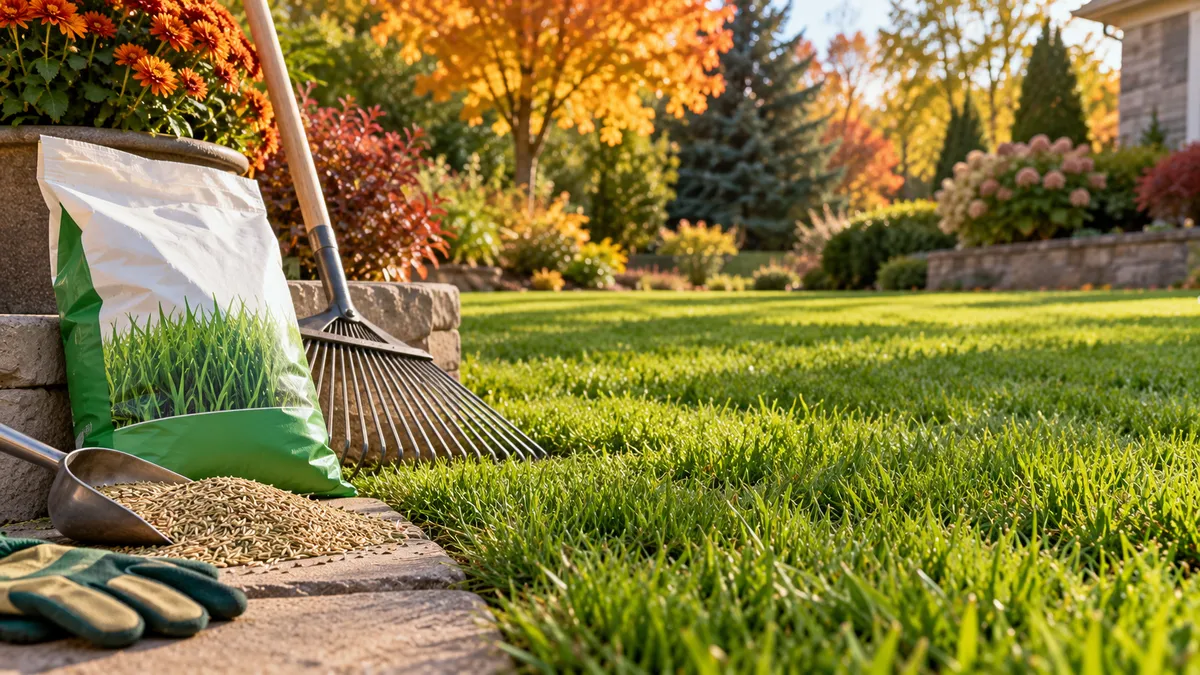
Fall Lawn Care in New Jersey: What to Do in September
September is one of the most important months for fall lawn care in New Jersey. After months of summer heat, foot traffic, dry weather, and weeds, your lawn may look thin, stressed, or uneven. Cooler temperatures give cool-season grasses a chance to recover while the soil is still warm enough to support healthy root development.
For homeowners in Marlton, NJ and throughout South Jersey, September is a good time to evaluate the lawn, address compacted soil, repair bare areas, and prepare healthy grass for colder weather. Staffa Stone Garden Center carries lawn and garden supplies that can help you take care of these seasonal projects without making fall lawn care more complicated than it needs to be.
1. Start Fall Lawn Care in New Jersey With Aeration and Soil Preparation
Healthy grass starts below the surface. If your soil has become compacted from regular foot traffic, mowing, pets, summer activities, or heavy equipment, grass roots may have difficulty getting the air, water, and nutrients they need.
Core aeration removes small plugs of soil from the lawn. These openings allow oxygen and water to move more easily into the root zone while relieving some soil compaction.
Rutgers Cooperative Extension also recommends fall aeration as a way to improve access for grass seed and soil amendments. Aerating when the soil is slightly moist can make the process more effective.
September is especially useful for aerating if you plan to overseed afterward. The openings created during aeration can improve seed-to-soil contact and give new grass a better opportunity to establish before winter.
Look at Your Lawn Before You Start
Not every lawn needs the same treatment. Walk around your property and look for thin patches, bare areas, heavy traffic zones, standing water, or places where the ground feels unusually hard.
These areas may indicate compaction, poor drainage, or other growing conditions that need attention.
You may also want to test your soil before automatically adding lime or fertilizer. A soil test can provide information about pH and nutrient levels, allowing you to choose products based on what your lawn actually needs.
This is particularly important when choosing fertilizer. New Jersey has specific requirements regarding phosphorus in lawn fertilizer, so homeowners should always follow product labels and current state guidelines.
If you live in Marlton, Mount Laurel, Cherry Hill, Medford, Voorhees, or another nearby South Jersey community, September is a good time to take a closer look at your lawn rather than treating every area exactly the same.
Focus first on the parts of the property that actually need attention.
2. Seed and Overseed Your Lawn While Fall Conditions Are Favorable
Early fall offers some of the best conditions of the year for establishing grass in New Jersey.
Rutgers NJAES identifies August 20 through October 10 as the primary turf establishment period for southern New Jersey. Earlier planting within that window generally gives new grass more time to develop before winter.
Cooler evenings, moderate daytime temperatures, warm soil, and typical fall moisture can all support seed germination and early root growth.
If your lawn is generally healthy but looks thin, overseeding may be enough to improve its density. Larger bare areas may require additional soil preparation and more extensive seeding.
Choose Grass Seed for Your Property
Several cool-season grasses are commonly used in New Jersey lawns, including:
Tall fescue
Fine fescue
Perennial ryegrass
Kentucky bluegrass
The best option depends on your property.
Consider how much sunlight the area receives, whether it experiences heavy foot traffic, how well the soil drains, and how much maintenance you want to provide.
Different areas of the same yard may even benefit from different grass varieties or seed mixtures.
Improve Seed-to-Soil Contact
Simply scattering grass seed over compacted turf may not produce the results you want. Grass seed needs good contact with the soil along with adequate moisture to germinate successfully.
Aerating before overseeding can help create openings where seed can reach the soil rather than sitting on top of existing grass.
For lawns with excessive thatch or larger areas that need renovation, additional soil preparation may also help improve establishment.
Once you spread seed, follow the directions provided with the product and keep newly seeded areas consistently moist. Avoid flooding the area or allowing water to wash the seed away.
As new grass becomes established, you can gradually move from frequent light watering to a more typical lawn-watering routine.
Before purchasing materials, measure the lawn or the specific sections you plan to repair. Knowing the approximate square footage makes it easier to estimate how much grass seed, soil product, or fertilizer you need.
Staffa Stone Garden Center offers lawn and garden supplies and landscape materials at its Marlton location. If you are unsure which products make sense for your fall project, the team can help you narrow down your options based on what you are trying to accomplish.
3. Finish September With Smart Fertilizing, Watering, and Mowing
Aerating and seeding are important parts of fall lawn care in New Jersey, but your work should not stop once the seed is down.
The way you fertilize, water, and mow during the rest of September can affect how successfully your lawn heads into winter.
Fall is an important growing period for cool-season turf. During this time, grass can use nutrients to support root growth and recover from summer stress.
The right fertilizer program depends on your grass species, soil conditions, lawn health, irrigation practices, and other factors.
Avoid assuming that more fertilizer automatically means healthier grass. Too much nitrogen can encourage excessive growth and create additional maintenance issues.
Always follow product directions carefully. Soil testing can also help determine whether lime, phosphorus, potassium, or other amendments are appropriate for your lawn.
Keep Newly Seeded Areas Moist
New grass seed needs consistent moisture during germination.
During dry or windy September weather, newly seeded areas may need more attention than established sections of the lawn. The goal is to keep the seedbed evenly moist without saturating the soil.
Once seedlings develop stronger roots, watering can gradually become deeper and less frequent.
Established grass should also be watered according to actual soil and weather conditions rather than automatically running irrigation every day.
Keep Mowing While the Grass Is Growing
Do not stop mowing just because summer is ending.
Cool-season grass can continue growing throughout the fall when temperatures are favorable. Keep mower blades sharp and avoid removing too much of the grass blade at one time.
Newly established grass should be given enough time to grow before its first mowing. Rutgers recommends mowing newly established turf once it reaches approximately three inches tall.
Grass clippings can often remain on an established lawn when they are short and evenly distributed. They break down over time and return organic material and nutrients to the soil.
Common Fall Lawn Care Questions
Is September too late to seed a lawn in South Jersey?
No. September falls within the primary lawn establishment period for southern New Jersey. Planting earlier in the fall generally gives grass more time to establish before winter temperatures arrive.
Should I aerate before overseeding?
Aeration can be especially helpful when the soil is compacted. It creates openings in the turf that can improve seed-to-soil contact while allowing air and water to reach the root zone more easily.
Does every lawn need fertilizer in September?
Not necessarily. Fertilizer needs vary according to grass type, soil conditions, lawn health, and previous applications. Follow product recommendations and consider a soil test when you are unsure what your lawn needs.
Can I wait until spring to repair bare lawn areas?
You can, but early fall generally provides favorable conditions for cool-season grasses. Fall seeding also faces less competition from many annual weeds than spring seeding.
How often should I water new grass seed?
Newly seeded soil should remain consistently moist during germination without becoming waterlogged. As the seedlings establish and their roots develop, watering can gradually become less frequent and deeper.
Get Your Lawn Ready for Fall in South Jersey
A little work in September can make a noticeable difference in how your lawn looks next spring. Focus on the basics first. Relieve soil compaction where needed, repair thin areas with appropriate seed, maintain consistent moisture, mow properly, and give established turf the care it needs before colder weather arrives.
If you are getting started with fall lawn care in New Jersey, visit Staffa Stone Garden Center at 199 Tomlinson Mill Road in Marlton, NJ for lawn and garden supplies, soil products, and seasonal landscape materials. You can also contact the Garden Center at (856) 596-7779 if you have questions about products for your fall project.
Staffa Stone Garden Center can help you find the lawn and garden materials you need to prepare your property for fall and the colder months ahead.


