
Fire Pit, Fire Bowl, or Fire Burner? Finding the Perfect Fit for Your Backyard
There's something about gathering around a fire that never gets old.
Maybe it's the crackle of burning logs on a crisp fall evening. The warmth that lets you linger outside just a little longer. Or those unplanned conversations that happen when everyone puts down their phones and pulls up a chair.
Whatever the reason, a fire feature has a way of turning an ordinary backyard into a place people naturally want to gather.
But creating that experience involves more than choosing something that looks beautiful.
Should you build a traditional stone fire pit, add a modern fire bowl, or incorporate a gas fire burner into a custom patio design?
Each offers a different experience, and the right choice depends on your space, your style, and how you envision spending time outdoors.
Let's explore the possibilities.
Fire Pits, Fire Bowls, and Fire Burners: What's the Difference?
Although the terms are sometimes used interchangeably, these three options aren't quite the same.
Understanding their differences can help you choose a fire feature that looks great, functions well, and complements your overall hardscape design.
The Traditional Fire Pit: A Backyard Classic
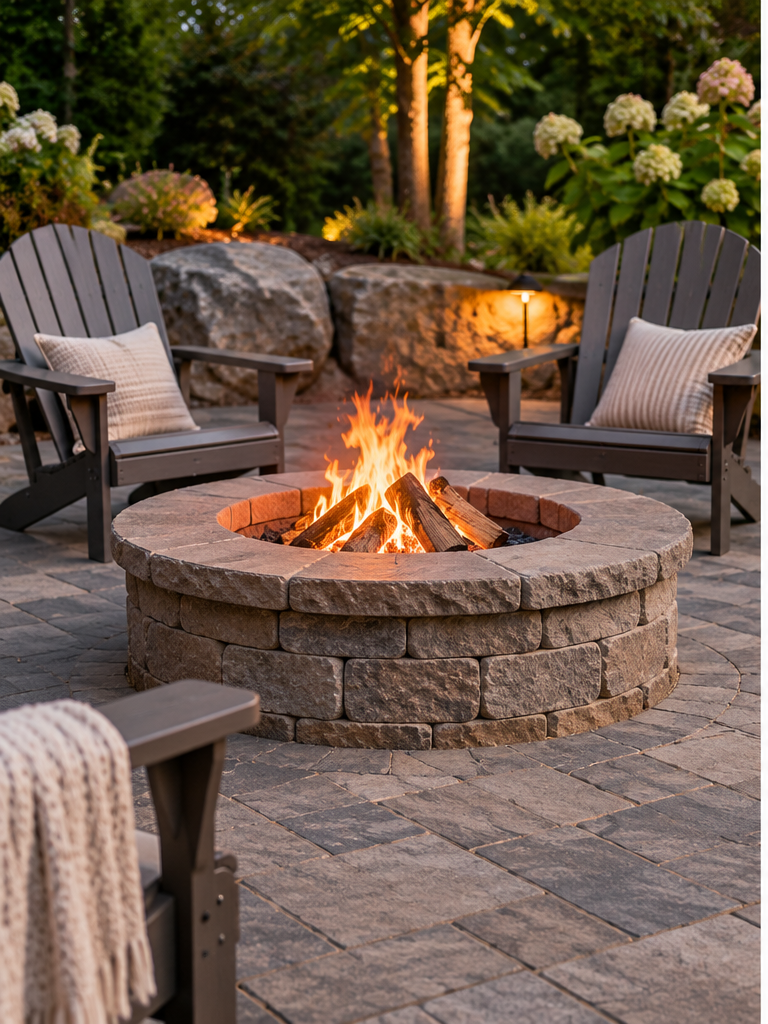
Picture a circle of comfortable chairs surrounding a beautiful stone fire pit. Maybe there's a stack of firewood nearby, a few marshmallows roasting, and no particular reason to head inside.
That's the enduring appeal of a traditional fire pit.
Fire pits can be constructed from natural stone, concrete, or manufactured hardscape blocks, making them a natural addition to patios and outdoor living spaces.
Some are permanent structures designed as part of a larger hardscape project. Others are freestanding units that offer greater flexibility.
And while many people associate fire pits with burning wood, gas-powered options are also available.
Why choose a traditional fire pit?
It creates a natural focal point for outdoor gatherings.
Stone and manufactured hardscape materials can coordinate beautifully with patios, walkways, and retaining walls.
Both wood-burning and gas-powered options are available.
A built-in design can become a permanent part of your outdoor living space.
For homeowners who love the character of natural stone and the feeling of a traditional backyard gathering place, a fire pit is often a natural fit.
Fire Bowls: A Modern Take on Outdoor Warmth
Not every backyard calls for a traditional stone fire pit.
Sometimes, a simple sculptural element makes the biggest statement.
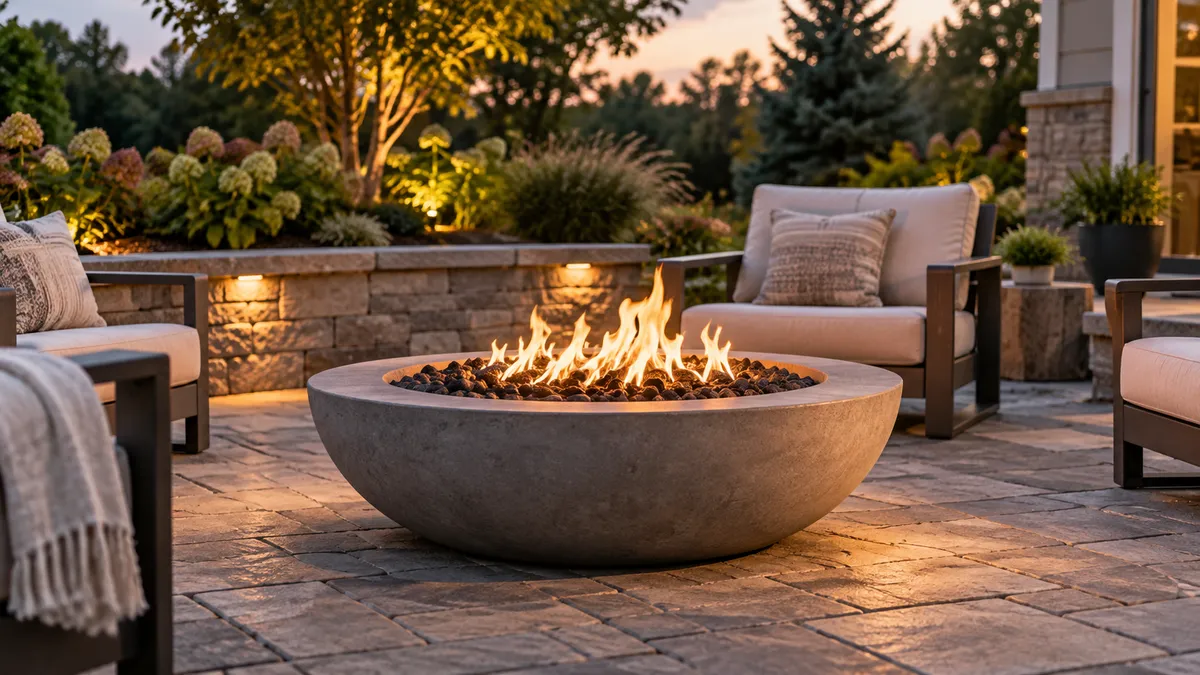
Fire bowls bring a different aesthetic to outdoor living. Their rounded shapes and clean lines can complement contemporary patios, modern outdoor furniture, and thoughtfully landscaped spaces.
Depending on the product, a fire bowl may burn wood, propane, or natural gas.
Some become the centerpiece of a seating area, while others serve as decorative accents within a larger outdoor design.
Why choose a fire bowl?
It can introduce a sleek, contemporary look.
Freestanding models may offer more flexibility in patio design.
Different sizes and finishes allow for a range of design possibilities.
It can complement outdoor spaces where a large built-in stone structure isn't the desired look.
One important consideration: a smaller fire bowl doesn't automatically mean it can safely fit into a smaller space. Required clearances depend on the specific product, fuel type, and manufacturer instructions.
Fire Burners: When You Want Something Custom
Here's where the possibilities get especially interesting.
Unlike a fire pit or fire bowl, a fire burner is generally the component that produces and distributes the flame within a gas-powered fire feature.
That means it can be incorporated into a custom-designed structure rather than purchased as a complete freestanding unit.
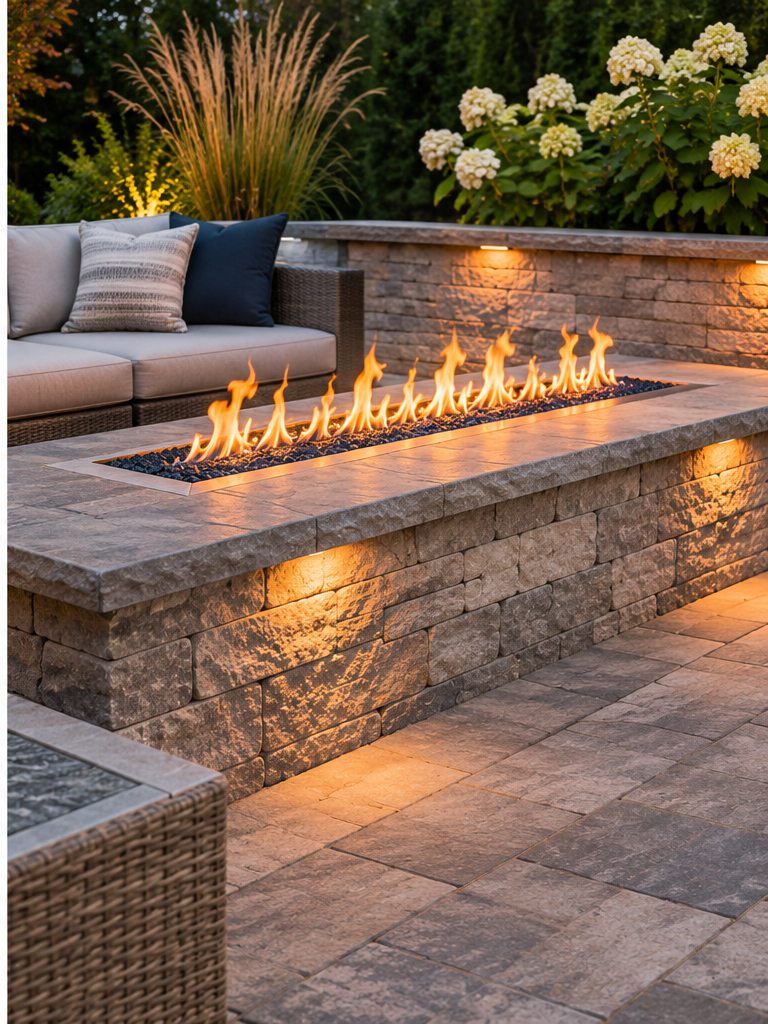
Imagine a long, linear flame running through a contemporary stone feature wall, or a custom gas fire pit designed to complement your patio pavers.
Gas burners come in different sizes, shapes, and configurations, offering flexibility for homeowners and contractors planning distinctive outdoor living spaces.
Approved decorative materials, such as fire glass or lava rock, can add another layer of visual interest.
At Staffa Stone, we carry fire feature products from manufacturers including Kindred Outdoors & Surrounds and Warming Trends, giving homeowners and contractors options for creating outdoor gathering spaces.
Because gas burners require compatible components, proper ventilation, and correctly sized fuel connections, installation should follow manufacturer specifications and be handled by qualified professionals.
Wood-Burning vs. Gas Fire Features: Which Experience Is Right for You?
This decision is about more than fuel.
It's really about how you want to enjoy your backyard.
For the Love of a Real Wood Fire
There's no mistaking the sound of a wood-burning fire.
The crackle, the shifting flames, the familiar smell of burning logs. For some people, those details are part of the experience, and a gas flame simply isn't the same.
Wood-burning fire pits offer that traditional atmosphere, particularly in larger backyard spaces designed for gathering.
But they also require a little more effort.
You'll need somewhere to store dry firewood, time to prepare and tend the fire, and a safe way to dispose of cooled ashes afterward.
Smoke is another consideration, especially when seating areas or neighboring properties are nearby.
If you enjoy the ritual of building and tending a fire, that may be part of the appeal. If you'd rather skip the preparation, another option might suit you better.
The Ease of Gas Fire Pits and Fire Bowls
Imagine stepping outside after dinner, turning on your fire feature, and settling into your favorite chair without gathering logs or cleaning out ashes.
That's the convenience of gas.
Depending on the system, gas-powered fire features can use natural gas or propane and may offer different ignition and flame-control options.
They're particularly appealing for homeowners who entertain frequently or want to enjoy their patios without the preparation involved in a wood fire.
There are trade-offs, of course.
Natural gas systems may require a professionally installed gas line, while propane systems need appropriate fuel storage and cylinder handling. Gas burners and connections also require proper maintenance.
The question to ask yourself is simple: Do you love the experience of making a fire, or do you primarily want to enjoy sitting beside one?
Neither answer is wrong. But knowing the difference can make choosing much easier.
Choosing a Fire Feature That Works With Your Backyard
A beautiful fire feature should feel like it belongs in your outdoor space, not like something added as an afterthought.
Before making a decision, consider a few practical details.
Start With the Space You Have
A large patio may accommodate a permanent stone fire pit surrounded by generous seating.
A smaller patio might be better suited to a compact fire bowl or appropriately sized gas feature.
But size isn't just about what physically fits.
Think about how people will move around the space, where furniture will sit, and how much distance is needed between the flames and surrounding structures.
Manufacturer clearances and applicable local fire codes should always guide the final placement.
Let Your Materials Work Together
This is where thoughtful hardscape planning can make a noticeable difference.
A traditional stone fire pit can look beautiful alongside textured pavers, rustic seating, and natural landscape materials.
A smooth concrete fire bowl or linear gas burner may feel more at home with contemporary pavers, clean architectural lines, and a modern patio layout.
Consider the colors, textures, and proportions of the materials you're using.
The goal isn't necessarily to make everything match. It's to create a space where the different elements complement one another.
A helpful tip: If you're planning a new patio, choose your fire feature early in the design process.
A built-in fire pit or gas burner may influence the patio layout, seating arrangement, material selections, and utility planning. Making those decisions before construction begins can help avoid unnecessary changes later.
Think Beyond the Purchase Price
The cost of a fire feature doesn't end with the initial purchase.
Wood-burning options require firewood, storage, and regular cleanup.
Gas-powered systems may involve additional installation costs, particularly when gas connections or custom construction are necessary. They also have ongoing fuel and maintenance expenses.
Think about how often you'll actually use the feature and how much upkeep you're comfortable with.
The best choice isn't necessarily the biggest or most expensive. It's the one that fits the way you live.
Outdoor Fire Features in New Jersey: A Few Things Worth Considering
Here in New Jersey, outdoor living doesn't have to end when summer does.
In fact, some of the most enjoyable evenings outside happen when the temperature begins to drop.
A thoughtfully designed fire feature can help extend the use of a patio into the cooler months, creating an inviting place to gather well beyond the traditional summer season.
But New Jersey weather brings its own considerations.
Rain, moisture, wind, and seasonal temperature changes can affect outdoor materials and equipment. Coastal properties may also face additional exposure to salt air and weather.
Choose products designed for outdoor use, and follow the manufacturer's recommendations for cleaning, covering, and seasonal maintenance.
Know the Local Fire Regulations
Before installing a permanent gas feature or purchasing a wood-burning fire pit, check with your local municipality or fire official.
Rules may vary depending on the property, the type of fire feature, and local fire restrictions.
New Jersey also has requirements governing recreational fires in or near certain forested areas, and additional restrictions may apply during periods of elevated wildfire risk.
The New Jersey Forest Fire Service provides guidance on recreational fires, permits, and restrictions.
A little planning now can help prevent expensive changes or disappointments later.
Fire Pit Safety and Maintenance: Keep the Good Times Going
Once you've created your outdoor gathering space, a little routine care can help keep it looking beautiful and functioning properly.
For wood-burning fire pits, remove cooled ashes when appropriate, clear debris, and periodically inspect the structure for damage.
For gas-powered fire features, follow the manufacturer's maintenance instructions, inspect components as directed, and have qualified professionals handle repairs or gas-related work.
Always keep fire features away from combustible materials according to the required clearances, supervise active fires, and keep children and pets at a safe distance.
Never use gasoline or other liquid accelerants to start or restart a wood fire.
And remember that the surrounding hardscape deserves attention, too. Keeping pavers and stonework clean and watching for shifting or other changes will help preserve the overall space.
Frequently Asked Questions About Outdoor Fire Features
Is a fire bowl the same as a fire pit?
Not exactly. A fire bowl is typically a rounded, bowl-shaped outdoor fire feature. Fire pits are a broader category that can include built-in stone structures and freestanding units. Some fire bowls may also be considered fire pits.
Are gas fire pits easier to maintain than wood-burning fire pits?
Generally, yes, when it comes to routine cleanup. Gas fire pits don't produce wood ash or require firewood storage, but they still need proper inspections, maintenance, and attention to manufacturer instructions.
Can I add a gas burner to an existing fire pit?
Possibly. Not every existing fire pit is suitable for conversion. A qualified professional should evaluate the structure, ventilation, materials, clearances, and fuel connections before components are purchased.
Which fire feature is best for a small backyard?
A compact fire bowl or appropriately sized gas fire pit may be suitable, provided the required clearances and safe seating distances can be maintained.
Can I use an outdoor fire pit during fall and winter in New Jersey?
Yes, when weather conditions, local regulations, manufacturer instructions, and any applicable fire restrictions allow it.
Should I choose my fire feature before building my patio?
Ideally, yes, especially if you're planning a permanent stone structure or gas-powered system. Early planning makes it easier to coordinate materials, utilities, seating, and the overall patio layout.
The Best Backyard Fire Feature Is the One That Brings You Outside
At the end of the day, choosing between a fire pit, fire bowl, and fire burner isn't just about the structure itself.
It's about the space you want to create around it.
Maybe that's a traditional stone fire pit where friends gather on autumn evenings. Maybe it's a sleek gas fire bowl that adds warmth to a modern patio. Or perhaps it's a custom fire feature that becomes the centerpiece of an entirely new outdoor living space.
Whatever you're envisioning, the right materials and a little thoughtful planning can help bring it together.
At Staffa Stone, we supply hardscape materials, natural stone, pavers, and outdoor fire feature products for homeowners and contractors throughout New Jersey.
Whether you're planning a complete patio renovation or simply exploring ways to make your existing backyard more inviting, our team can help you explore materials and products that complement your vision.
Explore our fire pits, fire bowls, and burners, or contact Staffa Stone at (732) 831-4174 to learn more about available options.
Because sometimes the best part of a backyard isn't what you build.
It's what happens there.


